




There’s a specific moment when you realize that wealth protection isn’t a theoretical matter.
It’s the moment when you open your phone and find worried messages from clients who don’t know what’s about to happen to their bank accounts.
That moment has arrived, and it had the Middle East as its backdrop.
The geopolitical tensions that have hit the region in recent weeks have brought back to the center of attention a truth that tends to be ignored in daily life: governments, in crisis situations, move quickly.
Much faster than you think. And the moment they impose limitations, freezes or restrictions on bank accounts, it’s already too late to get organized.
This article collects three concrete rules that every person with wealth to protect should know and apply before a problem arises.
These are the same indications we give our clients every day, and which at this moment are making the difference between those who sleep soundly and those desperately seeking solutions.
Internal security and geopolitical stability: two different concepts
Before getting into the three rules, it’s necessary to clarify a misunderstanding that’s constantly repeated.
The United Arab Emirates are, objectively, one of the safest countries in the world in terms of crime. The rate of petty crime is very low, the streets are safe at any hour, and anyone who has lived there knows this very well. This is an incontestable fact.
But internal security and geopolitical stability are two completely different things.
Just open Google Maps to understand where the United Arab Emirates are located. The Middle East is not a geopolitically cold zone.
It never has been, and recent events confirm it: the UAE intercepted more than 130 missiles in a single day. They handled it well, probably better than many European countries would have known how to do. But this doesn’t change the geographical and political reality of that region.
When reasoning about where to hold your capital, this distinction is fundamental. It’s not a judgment on the country. It’s a lucid assessment of risk.
Rule 1: Forget plan B
You often hear talk of plan B as if it were the definitive solution to banking diversification. “I have an account in Switzerland as plan B in case the UAE one has problems.” The intention is understandable, but the reasoning is wrong at its root.
A plan B is something that activates only when everything else goes wrong. The moment you really need it, you discover it was poorly structured, that it doesn’t work as you imagined, or that you can’t access it in useful time.
The correct model is different: not a plan A and a plan B, but multiple plan As.
Three bank accounts in three high-profile jurisdictions, each of which functions normally and independently from the others. The practical rule is simple: no single jurisdiction should contain more than 33% of your liquid wealth.
A combination that works very well is Singapore, Switzerland and Panama. Three solid jurisdictions, with different operational characteristics that complement each other. It’s not the only possible combination, but it illustrates the principle well: real diversification, not facade diversification.
Switzerland deserves a separate mention: it has over three hundred years of banking history behind it.
That history is a guarantee that no emerging market, however attractive and dynamic, can offer. The United Arab Emirates are a relatively young market. They can grow and establish themselves further, or go through moments of instability like the current one.
Switzerland, in all probability, will still be in its place in twenty, fifty years. This stability has a value that should always be considered.
If your wealth doesn’t yet allow you to open three accounts in three different jurisdictions, start with two. But never with just one.
Rule 2: Never the same institution in different jurisdictions
This is the mistake made most frequently, and it’s one of those that in appearance seems intelligent but in practice leaves wealth completely exposed.
The typical scenario is this: you open an account with a large international institution in the UAE—HSBC, Barclays, Standard Chartered, to name a few.
You already feel comfortable with that institution, you know the platform, you already have the relationship. You want to diversify geographically, so you open a second account with the same institution in the UK or United States, linking it to the UAE account.
This is a serious mistake.
The second account was opened using the first as reference. The institution knows it, tracks it, and the two accounts are connected under the same umbrella.
The moment the UAE account is blocked or frozen—for any reason—the second country’s account automatically follows the same fate. You don’t have a functioning plan B. You simply have two unusable accounts at the same time.
The solution is simple in principle: each account must be opened at a different institution.
But there’s a second level that can’t be ignored: the secondary account’s jurisdiction must be one that can receive funds quickly from the primary jurisdiction.
Not all jurisdictions communicate well with each other.
Singapore works very well with the UAE but has difficulties with Europe.
Panama often relies on European banks as correspondents, and is therefore compatible with many flows coming from the Old Continent.
The Emirates themselves, it must be said clearly, historically have difficulty sending funds quickly to Panama: there are no correspondent banks in the right places, and many jurisdictions don’t love receiving transfers from there.
These are operational details that make the difference between a second account that really works and one that exists only on paper.
If reading these lines you realize that your banking structure isn’t set up this way, this isn’t the time to worry: it’s the time to act. Our consultants work every day with professionals and entrepreneurs in this situation and can indicate with precision which institutions and jurisdictions best fit your profile—contact us for a free analysis.
Rule 3: Choose at least one systemically important bank
The third criterion concerns the quality of institutions, not just their geographical distribution.
There are banks that every single State considers so strategically important that they can’t afford to let them fail. They’re called systemically important banks.
Their collapse would drag down the economy of the entire country, and for this reason they’re protected with absolute priority. At a global level there are also globally systemically important institutions: banks so interconnected with the international economy that in any crisis scenario they would be among the last to fall.
UBS is a well-known example: it’s officially classified as a globally systemically important institution.
It’s a regulatory classification that says everything about the guarantee that institution represents.
Alongside the large banks of global relevance exist institutions of strategic importance for individual jurisdictions that offer equally solid guarantees. Pictet is an emblematic example: founded in 1805, with over 600 billion euros under management, it’s one of the most solid institutions Switzerland has ever expressed. Its history and solidity make it one of the most reliable choices for those who want to seriously protect their capital.
The operational principle is clear: at least one of the main accounts—those where significant liquidity accumulates or investments are managed—should be at a systemically important institution.
Not for status reasons. But because in a real crisis scenario, these are the institutions that hold up.
The truth about the UAE that few say openly
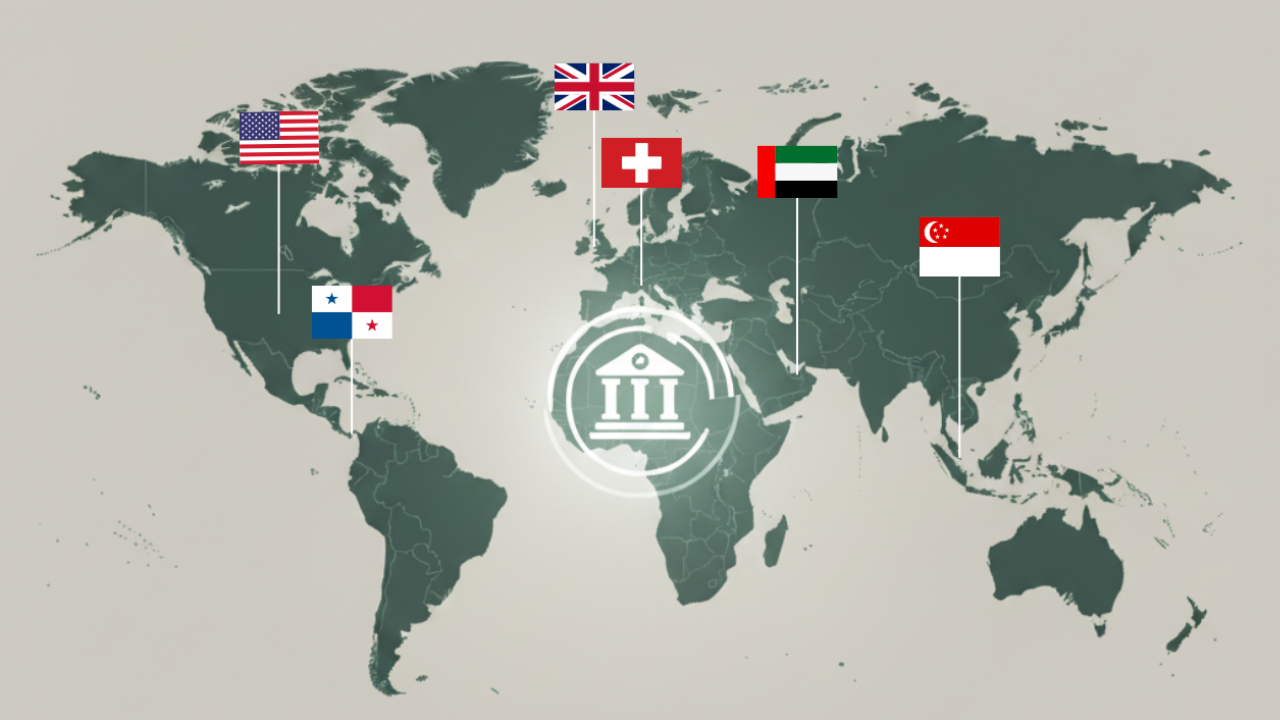
In recent times we’ve received many requests from clients who wanted to open accounts in the UAE even without being residents, or who wanted to use their UAE residency to open accounts in other countries. Our answer, in many cases, has been clear: it’s not convenient.
Some didn’t take it well. Now, looking at recent developments, perhaps the reasoning is easier to understand.
Those who built international banking relationships before—using UAE residency as leverage when it was still well perceived—moved intelligently.
That bank will continue to keep them as clients because it already knows them. But showing up today at a Swiss, British or American bank with UAE residency and asking to open a high-level private account is an uphill path.
The country is geographically exposed, politically sensitive, and after recent events this perception is destined to consolidate.
There’s also a specific problem with capital movement. The UAE has structural limitations on capital outflow that many underestimate. And recent tensions are pushing some local institutions to make it even more difficult to transfer large sums abroad. It’s operational resistance—delays, requests for additional documentation, silent refusals—that produces the same effect in practice.
The message is one: having multiple passports, multiple residencies, multiple corporate structures is certainly intelligent.
But all this serves little purpose if capital is concentrated in a single account, in a single jurisdiction, at a single bank.
The first thing to protect, and the most important, is where you keep your money. Everything else comes after.
Want to understand how to structure your banking situation correctly?
GloboBanks works every month with international clients to open banking relationships 100% remotely, regardless of residency jurisdiction and structure used.
Our senior consultants analyze each client’s specific situation and indicate with precision names, institutions and most suitable jurisdictions—based on over 20 individual variables.
You can book a free consultation: no commitment, no cost, no travel.
Just a concrete analysis of your situation and clear indications on how to protect it correctly. Considering the moment we’re going through, there’s no better time to do it.
→ Book your free consultation now
